
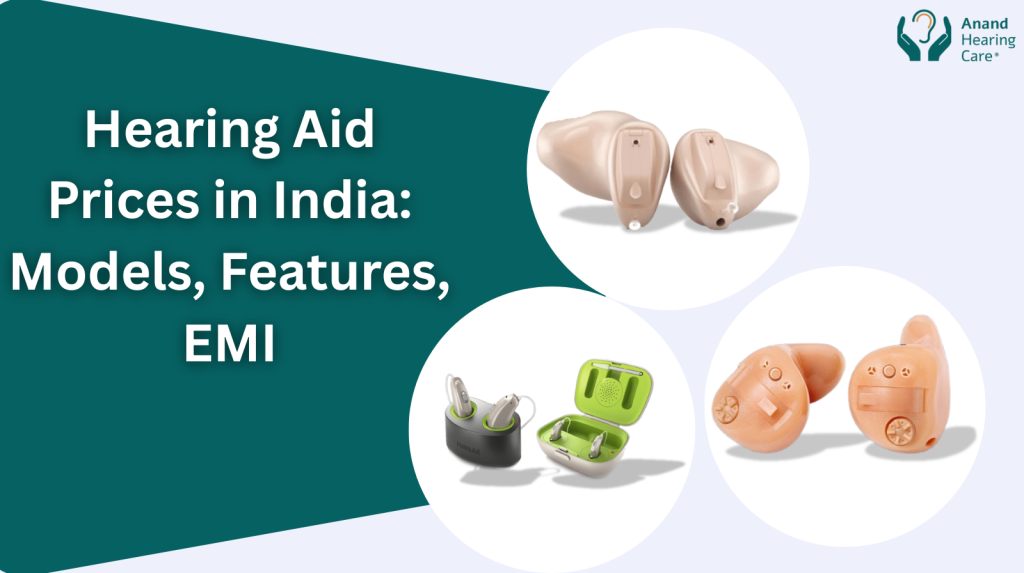
Hearing aids have evolved significantly over the years. What was once considered a basic sound amplifier is now a sophisticated digital device that helps people reconnect with conversations, family life, work, and social interactions with renewed confidence. As we enter 2026, hearing aids are not only smaller and more discreet, but also more intelligent – offering AI-driven speech clarity, Bluetooth streaming, rechargeable batteries, noise filtering for crowded environments, and specialized tinnitus relief.
However, the first question most patients ask is about pricing. The cost of a hearing aid in India varies significantly based on technology, comforts, hearing loss severity, and the brand chosen. Many people feel overwhelmed because websites and clinics mention dozens of models without explaining how they differ or why one may cost more than another. This blog simplifies everything – so you can understand models, features, EMI, and expectations in a clear, structured, and practical way.
Hearing Aid Price Range in India
The hearing aid price list in India is broad because different devices serve different needs. A person with mild age-related hearing loss who spends most of their time at home might need a basic device focused on speech amplification, whereas someone who attends meetings, drives, socializes frequently, and travels will benefit from advanced noise management and Bluetooth connectivity.
Below is a realistic overview of the 2026 price range:
| Product Image | Hearing Aid Category | Ideal For | Price Range (₹) |
|---|---|---|---|
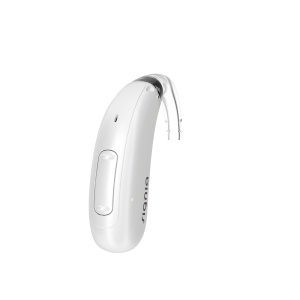 |
Entry Level | Small groups, low noise, home use, quiet lifestyle | ₹12,000 – ₹40,000 |
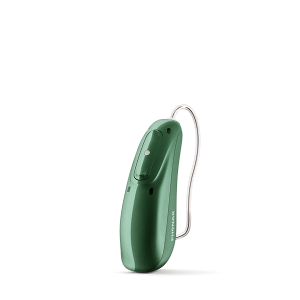 |
Essential Class | Small groups, mildly noisy places. Rechargeable and Bluetooth options | ₹45,000 – ₹80,000 |
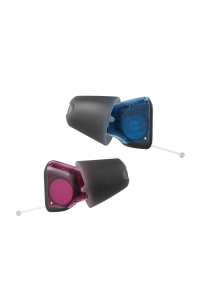 |
Mid-Level / Standard Class | Daily wear, moderate noise, offices and family gatherings | ₹85,000 – ₹1,50,000 |
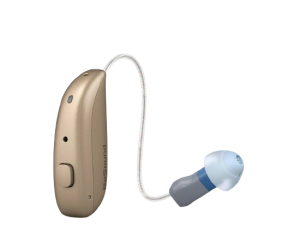 |
Advanced Class | Active users needing clearer speech in noise. AI-enabled motion sensors | ₹1,50,000 – ₹2,50,000 |
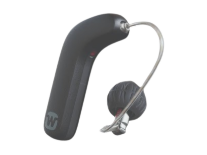 |
Premium Class | Very active lifestyles, large events, maximum clarity with top-end AI processing | ₹2,75,000 – ₹4,50,000 |
Key Factors That Impact Hearing Aid Prices: A Detailed Breakdown
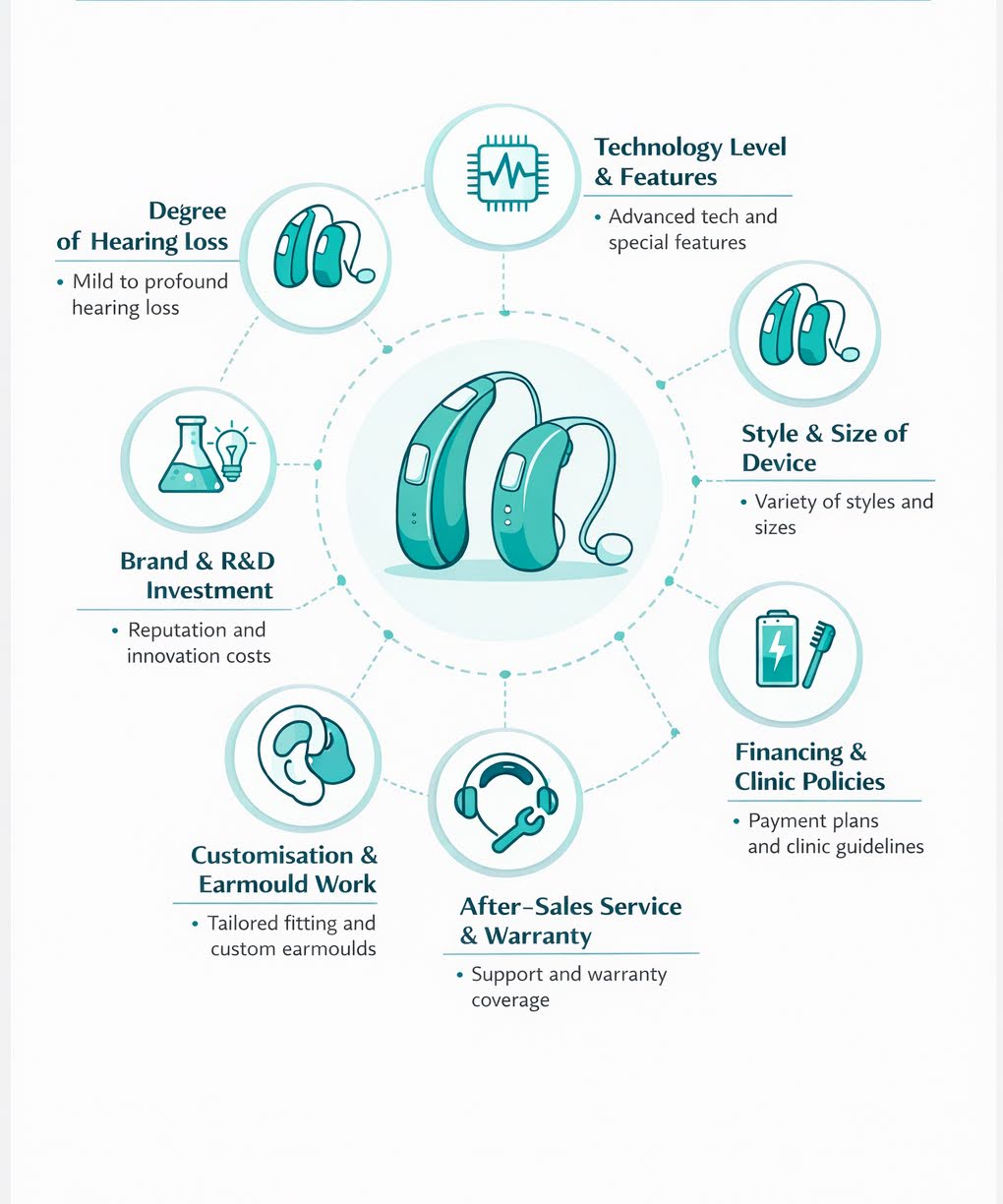
Factors influencing hearing aid costs can be grouped into technology, design, brand, and service‑related elements that all add up to the final price a user sees. Understanding these layers helps patients read any hearing aid price list in India more confidently and choose the right balance of features and value for their budget.
1. Technology level and features
- Entry, mid, and premium technology tiers differ in how well they handle background noise, speech enhancement, and sound personalization.
- Extra features like Bluetooth connectivity, rechargeability, tinnitus masking, automatic environment switching, and AI‑based processing add to the cost but can significantly improve everyday comfort and clarity.
2. Style and size of the device
- Behind‑the‑ear (BTE) models tend to be more economical because they give engineers more space for components and batteries.
- Smaller custom styles, such as CIC and II,C require precision manufacturing and miniaturized parts, which raises production costs and therefore the final price.
3. Degree of hearing loss and performance power
- Mild to moderate losses can often be managed with lower or mid‑tier power levels, keeping prices moderate.
- Severe to profound losses need powerful receivers, stronger processors, and robust feedback control, making power BTE or advanced RIC models costlier.
4. Brand positioning and R&D investment
- Established international brands often charge more because they invest heavily in research, chip design, and software ecosystems.
- Value‑oriented or house‑brand options may use slightly older platforms to keep prices competitive while still offering reliable performance.
5. Customization and earmould work
- Individually moulded shells or earmoulds require impressions, lab work, and quality checks, adding lab and labour costs.
- Fine‑tuning sessions to personalize settings for different environments are part of professional fitting and are usually built into the overall package price.
6. After‑sales service, warranties, and support
- Packages that include extended warranties, regular servicing, follow‑up visits, and loss/damage cover appear more expensive upfront but often save money over the device’s lifespan.
- Clinics that provide structured counselling, periodic re‑programming, and long‑term monitoring factor these services into the quoted hearing machine price.
7. Accessories and ongoing consumables
- Chargers, TV streamers, remote microphones, and smartphone accessories can add to the total system cost.
- For non‑rechargeable models, batteries, domes, tubes, and wax guards are recurring expenses that should be considered in long‑term budgeting.
8. Financing options and clinic policies
- Zero‑cost or low‑interest EMI spreads the cost over months, making premium technology more approachable without changing the base price.
- Bundle offers, seasonal discounts, or upgrade programs at certain centres can effectively lower lifetime cost, even if the initial MRP is similar across providers.
How Different Hearing Aid Types Influence Pricing?
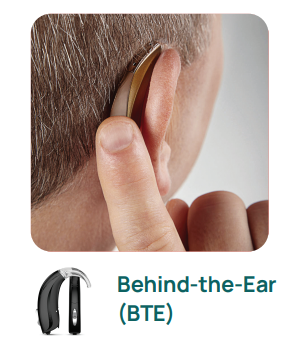 |
Behind-the-Ear (BTE)
A durable and comfortable option worn behind the ear with tubing that sends sound inside the ear canal.
BTEs are easy to handle and well-suited for seniors and children. They offer stable sound output even in changing environments and work with mild to profound hearing loss. |
|
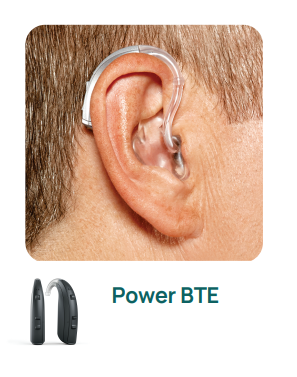
Power BTE
Designed for individuals with severe to profound hearing loss who need high amplification. Power BTEs minimize whistling feedback despite strong volume and provide better clarity for speech consonants such as “S,” “T,” and “F”.
|
 |
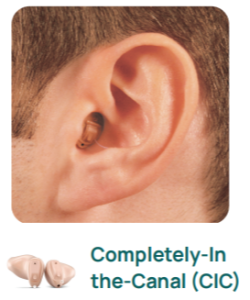 |
Completely-In-the-Canal (CIC)
These small devices sit fully inside the ear canal, making them nearly invisible. CICs are ideal for patients who prioritize discretion while still enjoying clear sound in quiet environments and one-on-one conversations.
|
|
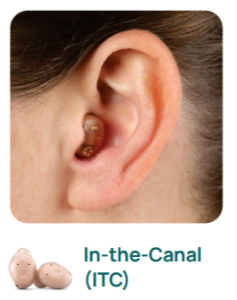
In-the-Canal (ITC)
Slightly larger than CIC but still cosmetically appealing. ITC hearing aids provide room for additional microphones and wireless features, delivering improved performance in noisy environments while maintaining aesthetic appeal.
|
 |
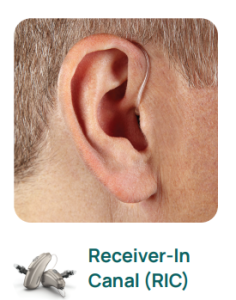 |
Receiver-In-Canal (RIC)
The most widely recommended globally due to comfort, natural sound quality, and versatility across hearing levels. The speaker sits inside the ear canal for better resonance, reduced distortion, and excellent speech clarity in noisy environments.
|
|
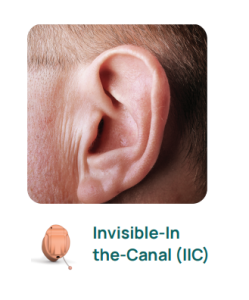
Invisible-In-the-Canal (IIC)
These devices fit deep inside the ear canal for maximum discretion. Their proximity to the eardrum delivers natural sound perception while remaining stable and secure for active users.
|
 |
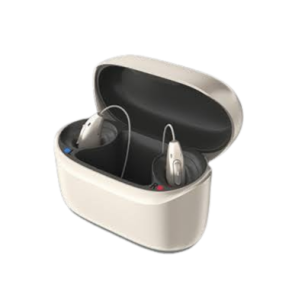 |
Bluetooth / Rechargeable Models
Rechargeable hearing aids eliminate battery replacements while Bluetooth connectivity allows hands-free calls and direct audio streaming from phones and TVs. Ideal for multitaskers and digital-first users.
|
Brand-Wise Hearing Aid Cost Breakdown in India
Brands vary in pricing because they specialize in different listening technologies — not because one is universally “better” than the other. For example, one brand may excel in background noise suppression, while another may specialize in tinnitus relief or speech clarity for elderly users.
| Brand | Model | Style | Key Features | Price Range (₹) | Best For |
|---|---|---|---|---|---|
| Signia | Pure C&G | RIC | Natural sound, rechargeable, Bluetooth, noise reduction | ₹20,990 – ₹4,50,000 | All-day comfort & clarity |
| Signia | Styletto IX | RIC | Slim design, AI speech clarity, fast charging | ₹50,000 – ₹4,50,000 | Style-conscious users |
| Signia | Motion C&G | BTE | Powerful output, durable build, rechargeable | ₹25,000 – ₹4,50,000 | Moderate–severe hearing loss |
| Signia | Silk C&G | CIC | Instant fit, nearly invisible, natural sound | ₹35,000 – ₹2,50,000 | Discreet hearing correction |
| Phonak | Audéo Sphere Infinio | RIC | AI sound processing, motion sensors, Bluetooth | ₹80,000 – ₹4,15,000 | Active lifestyles |
| Phonak | Audeo Lumity | RIC | Excellent speech clarity in noisy areas | ₹60,000 – ₹4,10,000 | Family & social conversations |
| Phonak | Terra | RIC | Value AI speech clarity, feedback control | ₹29,750 – ₹1,50,000 | Budget-friendly daily use |
| Phonak | Naída | BTE | Ultra-power amplification, rechargeable | ₹70,000 – ₹4,00,000 | Severe–profound loss |
| Oticon | Intent | RIC | BrainHearing™ intent-based sound processing | ₹90,000 – ₹4,25,000 | Group conversations |
| Oticon | Own | CIC | Custom invisible fit, natural processing | ₹40,000 – ₹3,20,000 | Highly discreet users |
| Oticon | Real | RIC | Wind & sudden sound stabilizer | ₹70,000 – ₹4,00,000 | Outdoor & travel use |
| Oticon | More | RIC | Deep learning speech clarity engine | ₹65,000 – ₹3,90,000 | Premium sound seekers |
| Starkey | Genesis AI | RIC | Health tracking, fall alerts | ₹70,000 – ₹2,50,000 | Health-conscious seniors |
| Starkey | Edge AI | RIC | One-tap speech boost, tinnitus relief | ₹60,000 – ₹2,35,000 | Frequent noisy environments |
| Starkey | Evolv AI | RIC | Feedback-free clarity, Bluetooth | ₹55,000 – ₹2,30,000 | Everyday listening |
| Starkey | Picasso | CIC | Invisible fit, directional microphones | ₹40,000 – ₹1,80,000 | Hidden appearance |
| Widex | Smart RIC | RIC | Pure Natural Sound™, rechargeable | ₹45,000 – ₹3,75,000 | Music lovers |
| Widex | Moment Sheer | RIC | Zero-delay processing | ₹60,000 – ₹3,75,000 | High comfort listening |
| Widex | Moment | RIC | Compact fit, speech clarity | ₹45,000 – ₹3,00,000 | Daily conversations |
| Widex | Magnify | BTE | Budget-friendly, reliable clarity | ₹23,990 – ₹1,20,000 | First-time users |
| GN ReSound | Nexia | RIC | Bluetooth LE Audio, streaming support | ₹70,000 – ₹4,24,997 | Smart device users |
| GN ReSound | Omnia | RIC | Advanced noise management | ₹65,000 – ₹4,00,000 | Social environments |
| GN ReSound | Enzo | BTE | Super-power output, tinnitus support | ₹55,000 – ₹3,60,000 | Severe hearing loss |
| GN ReSound | Key | RIC | Simple controls, steady clarity | ₹26,995 – ₹1,20,000 | First-time hearing aid users |
Comparing the hearing aid price list in India is a good starting point, but the final choice should always be based on a hearing test, listening challenges, and daily communication demands.
Which Hearing Aid Features Are Worth Paying Extra For?
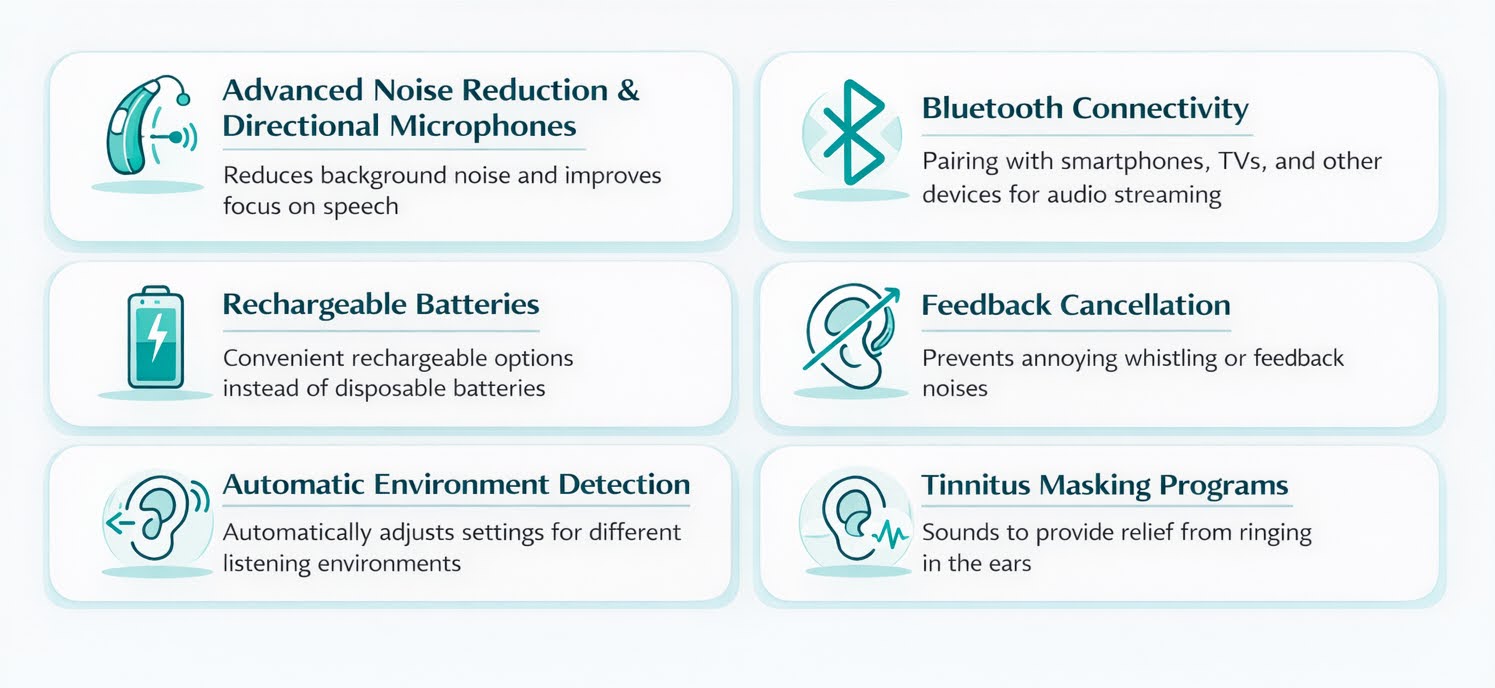
- Advanced noise reduction and directional microphones focus on speech while cutting background noise, making conversations clearer in restaurants, markets, traffic, and family gatherings.
- Bluetooth connectivity turns hearing aids into wireless earbuds, streaming calls, shows, and music straight from phones, tablets, and compatible televisions without extra accessories.
- Rechargeable batteries provide reliable all‑day power on a single overnight charge, eliminating disposable cells, saving money, and simplifying use for older adults.
- Feedback‑cancellation technology actively detects and neutralizes feedback loops, preventing sudden whistling or squealing when using phones, hugging loved ones, or adjusting volume.
- Automatic environment detection senses whether you’re in quiet rooms, vehicles, or noisy crowds and automatically optimizes microphone focus and noise‑reduction strength.
- Tinnitus masking programs play gentle, custom background sounds that help distract from ringing or buzzing, easing stress, concentration problems, and sleep difficulties.
EMI Options for Hearing Aids in India
Hearing aids can be a significant investment, and EMI options make them easier and more affordable. Many clinics and brands now offer No-Cost EMI, allowing you to pay in monthly installments without any added interest.
You can choose from flexible tenures – usually 3, 6, 9, or 12 months—depending on your comfort. Most major banks and credit cards support EMI, and some clinics also provide financing options even without a credit card.
With EMI, you don’t have to compromise on technology. Premium features like Bluetooth streaming, rechargeable batteries, and AI speech enhancement become more accessible through small monthly payments.
At Anand Hearing Care, we offer easy, No-Cost EMI plans across leading hearing aid brands and guide you through quick, hassle-free approval so you can choose the right device without financial stress.
How to Choose the Right Hearing Aid for Your Budget & Lifestyle?
- Start with a detailed hearing test and lifestyle discussion so recommendations match your hearing loss, listening situations, and expectations – not just a random price figure.
- Decide on a comfortable budget band, then ask which technology level in that range delivers the clearest speech in noise, crowds, meetings, and family conversations.
- Think about how much time you spend on calls, in offices, travelling, watching TV, or socialising and pick features that genuinely make those real‑life situations easier.
- Review warranty duration, what services are included, clinic location convenience, and whether future software or hardware upgrades are possible without replacing everything.
- Skip add‑on features you are unlikely to use regularly, but never compromise on sound clarity, physical comfort, and ease of handling in daily wear.
Why Thousands Trust Anand Care Hearing Centre for Hearing Aids in India?

For over five decades, Anand Hearing Care has been one of India’s most trusted names in hearing healthcare, serving 3,00,000+ satisfied customers across the country. Our RCI-certified audiologists, evidence-based testing, and world-class equipment ensure every patient receives an accurate diagnosis and the right hearing aid recommendation.
We work with all leading international brands and follow global standards for fitting, including Real Ear Measurements, so your devices are tuned perfectly to your hearing profile.
Our transparent pricing, free trials, EMI options, and two years of free aftercare make the entire journey comfortable and worry-free. With clinics across Delhi, Punjab, Chandigarh, Gurgaon, and Ludhiana, thousands of families trust us for reliable care, genuine products, and long-term support.
 |
 |
Conclusion
A modern hearing aid is no longer just a device that makes things louder—it is a personalized sound system, health tool, and communication bridge rolled into one. By understanding hearing aid price lists, styles, features, additional costs, and EMI options in India for 2026, you can confidently choose a solution that fits both your budget and your lifestyle while protecting your hearing health for years to come.
Frequently Asked Questions
Q: How much is 40% hearing loss?
“40% hearing loss” is an approximate way of describing a moderate hearing impairment, often corresponding to pure‑tone averages around the mid‑range on an audiogram. An audiologist will interpret your exact percentage and translate it into practical recommendations for amplification.
Q: How much do hearing devices cost?
Hearing devices can range from basic amplifiers costing relatively little to fully fitted digital hearing aids that involve professional testing, fitting, and follow‑up. In practice, most medically recommended hearing aids fall along a broad tiered structure, from entry‑level to premium technology, so nearly every budget has a suitable option.
Q: How much does a hearing aid cost in India?
In India, professionally fitted hearing aids are available from budget‑friendly entry models up to advanced premium solutions, with final pricing determined by brand, style, features, and service package. Discussing your budget upfront at a clinic helps the audiologist present 2–3 suitable choices rather than overwhelming you with the entire catalogue.
Q: What are the top 5 hearing aid brands in India?
India hosts multiple international and national hearing aid manufacturers known for digital technology, reliability, and service networks. The “top” five for you will depend on which brands your chosen clinic partners with, what level of technology you require, and how important factors like app control or rechargeability are in your daily life.
Q: What is the lifespan of a hearing aid?
With proper care, most modern hearing aids last around 5–7 years before technology or parts age make an upgrade sensible. Regular cleaning, moisture protection, and timely servicing play a big role in extending this lifespan.
Q: How many hours a day can you wear a hearing aid?
Hearing aids are designed for all‑day use, and many wearers comfortably keep them on for 10–16 hours, removing them only for sleep, showering, or swimming. Consistent daily use helps your brain adapt to the new sound patterns and makes communication feel more natural over time.